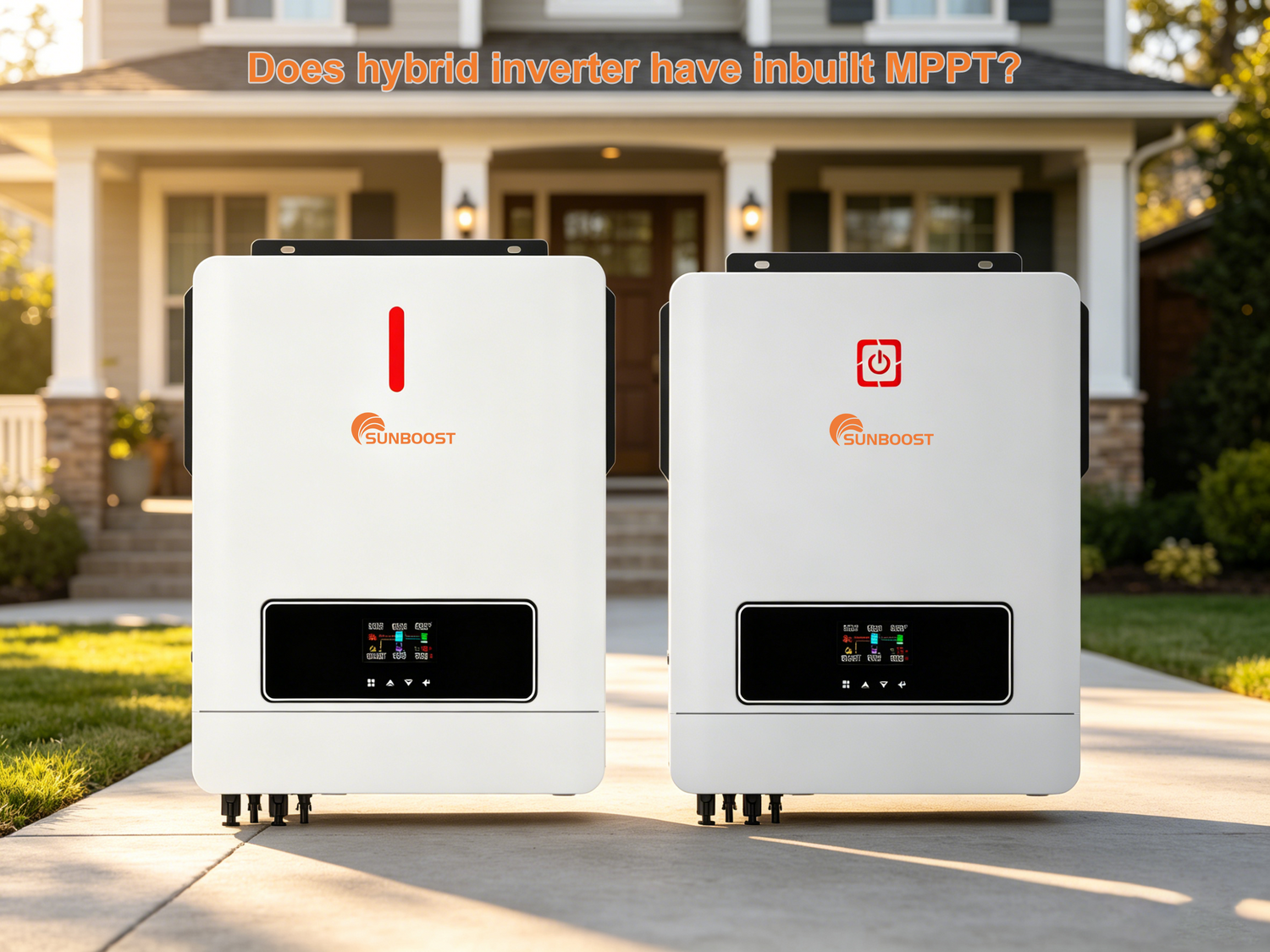
When shopping for solar power systems, one of the most common questions homeowners and installers face is whether their hybrid inverter includes a built-in Maximum Power Point Tracking (MPPT) controller. This article breaks down what MPPT is, how it works, and the significant benefits of having this feature integrated directly into your inverter.
you’ve almost certainly come across the term “MPPT.” It’s one of the most searched keywords in the solar industry, and for good reason: it’s the secret sauce that determines how much usable power you actually get from your solar array. A common point of confusion for buyers is whether this technology is included in the inverter itself or if it’s a separate component you need to purchase.I hope we can discuss this together.
What Is MPPT, and Why Is It So Important?
MPPT stands for Maximum Power Point Tracking. To put it simply, solar panels don’t produce power at a constant rate. Their output fluctuates constantly based on the intensity of sunlight, the angle of the sun, and the temperature.
Every solar panel has a specific “sweet spot” where it produces the maximum possible power, known as the Maximum Power Point (MPP). Without an MPPT controller, your solar system would simply convert power at whatever voltage the panels are currently producing, which is often far from optimal.
The MPPT controller’s job is to constantly monitor the voltage and current coming from the solar panels and adjust the operating conditions to keep them locked onto that maximum power point, regardless of changing environmental conditions. This process can boost the energy yield of your solar panels by 10-30% compared to older, simpler PWM controllers, especially in less-than-ideal conditions like partial shading or high temperatures.
The Benefits of Built-In MPPT in a Hybrid Inverter
Having an MPPT controller built directly into your hybrid inverter offers several key advantages over using a separate, external unit:
Higher Efficiency & Performance: Integrated MPPT controllers are specifically calibrated to work with the inverter’s DC-to-AC conversion circuitry. This synergy eliminates compatibility issues and ensures that power is transferred with minimal loss, from the solar panels to the battery bank and ultimately to your home appliances.
Simplified Installation & Cost Savings: An all-in-one unit reduces the number of components you need to buy and install. Fewer parts mean fewer wires, less complexity, and a lower risk of connection errors. This not only saves you money on equipment but also on installation labor.
Improved Reliability & Durability: With fewer external components and connections, there are fewer potential points of failure. Built-in MPPT controllers are designed to handle the same harsh conditions as the inverter itself, often with better heat dissipation and protection features than standalone units.
Space-Saving Design: Combining the inverter, charger, and MPPT controller into one compact unit saves valuable space in your home, garage, or shed, which is a major plus for residential installations.
SUNBOOST ECO Series: Verifying the Built-In MPPT
Looking at the specifications for the SUNBOOST ECO 4.2KW and 6.2KW PLUS models, the presence of a powerful built-in MPPT controller is clearly documented:
Built-in 120A MPPT Solar Controller: The spec sheet confirms a maximum solar charging current of 120A (for the 4.2KW model) and 120A (for the 6.2KW model). This high amperage rating means it can handle a significant amount of power from your solar array.
Max PV Input Power: The 4.2KW model supports a maximum PV input power of 6200W, while the 6.2KW model supports 6500W. This high capacity is only possible with a robust MPPT controller.
Wide MPPT Voltage Range: The operating range of 60-450VDC (with a maximum open-circuit voltage of 500VDC) provides incredible flexibility for designing your solar panel string configuration.

This confirms that the SUNBOOST ECO series is a true all-in-one hybrid inverter with integrated MPPT, eliminating the need for an external solar charge controller.
Conclusio
Choosing a hybrid inverter with a built-in MPPT controller is a smart move for anyone looking to build a reliable, efficient, and cost-effective solar power system. The SUNBOOST ECO series, with its powerful 120A MPPT controller, offers the performance and convenience you need to get the most out of your solar panels.
Before making your final purchase, always check the product specifications to ensure the MPPT controller’s voltage range and current capacity match your specific solar array design. This simple step will help you avoid costly mistakes and ensure your system operates at peak efficiency for years to come.