Power outages can strike without warning: summer heatwaves, winter ice storms, hurricane season grid failures, or remote cabins cut off from municipal electricity. For decades, portable gas generators were the go-to emergency power fix for North American families—but modern hybrid solar inverter systems have redefined residential backup energy.
If you’re stuck asking, “Generator vs solar power: which should I pick for my home, RV, or off-grid space?” this breakdown compares the two solutions head-to-head, focusing on noise, long-term cost, daily usability, maintenance, and real-world performance of our SUNBOOST iXCEED split-phase hybrid solar inverter.
Many buyers only weigh upfront price when choosing backup power, ignoring critical pain points like constant engine roar, expensive fuel refills, toxic exhaust, and weekly maintenance chores. Today’s all-in-one solar hybrid inverters eliminate nearly every downside of traditional gas generators while delivering reliable, round-the-clock power for household appliances. By the end of this guide, you’ll clearly understand which system fits your lifestyle, budget, and noise tolerance.
Noise Levels: The Biggest Day-to-Day Difference Between Generators and Solar Inverters
Noise is the most immediate, noticeable gap separating fuel generators and solar hybrid systems—and it’s the top complaint homeowners have about portable gas generators.
Standard portable gasoline generators operate at 68 to 82 decibels during runtime. To put that in perspective: a lawnmower hits roughly 70 dB, and a running generator will match or exceed that volume nonstop. If you run your generator overnight during a multi-day blackout, the constant roaring engine hum disturbs sleep, irritates family members, and triggers neighbor complaints in suburban neighborhoods. Campers and cabin owners also hate generator noise: it ruins quiet evenings outdoors, scares wildlife, and many campgrounds enforce strict generator curfews that limit power access after dark.
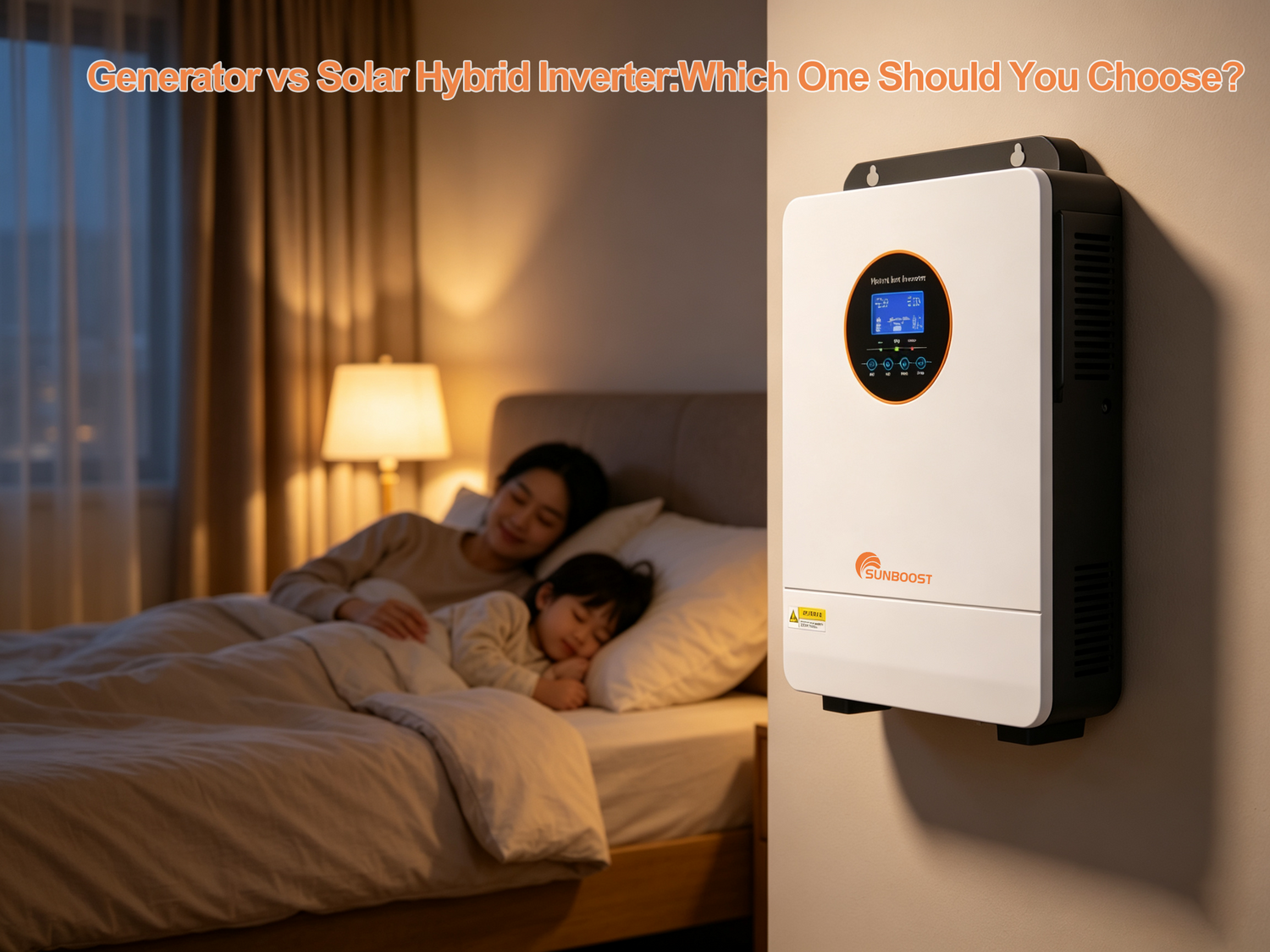
Our SUNBOOST iXCEED 5.5KW / 6.2KW split-phase hybrid solar inverter operates at barely audible volume, with only a soft, low-speed intelligent cooling fan under full load, clocking in under 40 decibels—quieter than a standard household refrigerator. There are no combustion engines, no rattling pistons, no loud exhaust vents, and no disruptive vibration, even when powering heavy loads like refrigerators, air conditioners, and washing machines. You can run this solar inverter 24 hours straight inside your garage or living room without disrupting rest, conversation, or peaceful downtime.
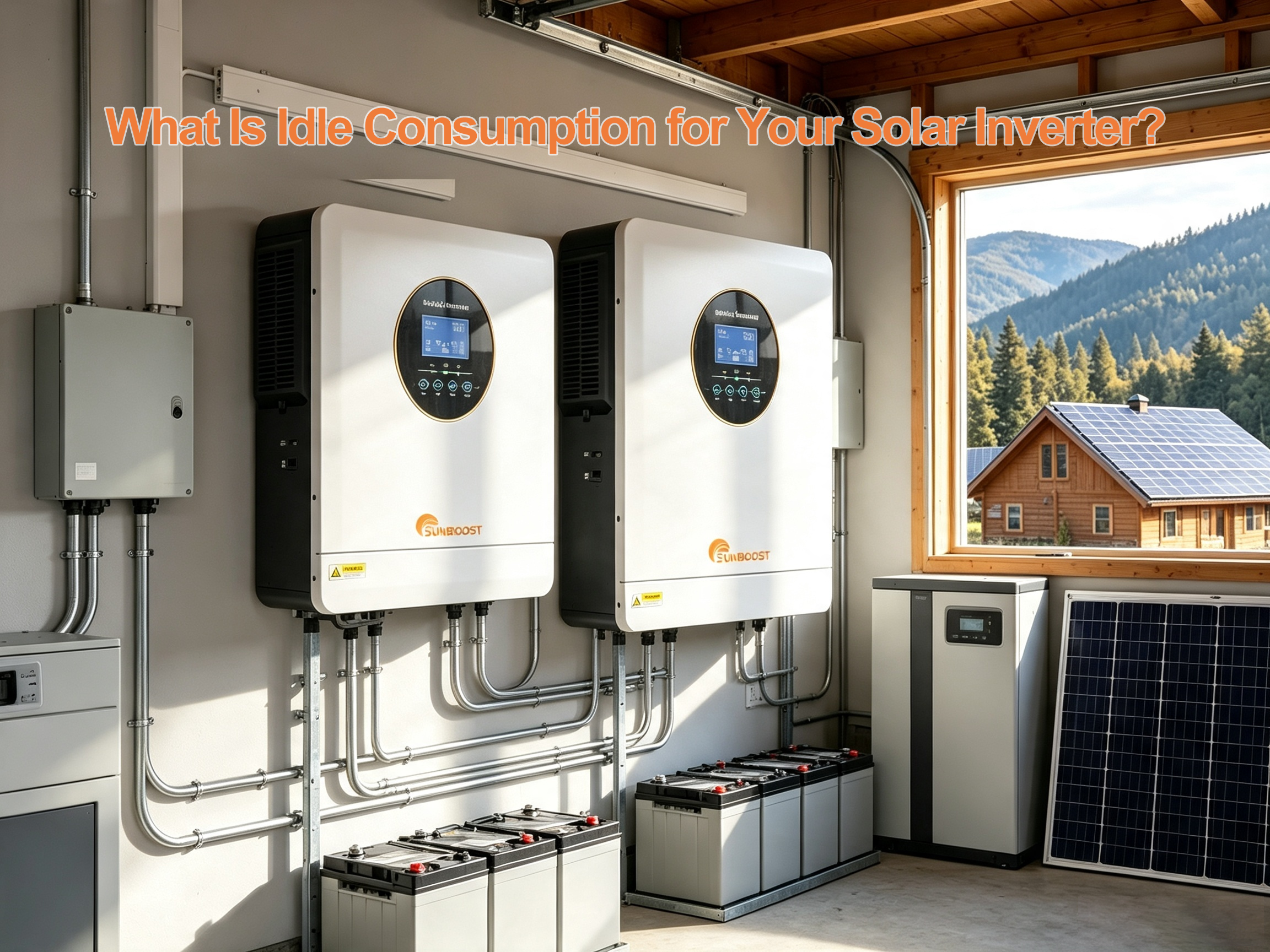
A standout feature of this hybrid unit is its generator auto-switch compatibility: the solar system runs silently off solar panels and lithium/lead-acid batteries for nearly all daily use. The noisy gas generator only activates as an emergency backup, kicking on automatically when battery charge drops to a pre-set level. This means you only rely on loud generator power during extended cloudy stretches, drastically cutting how often you deal with disruptive engine noise all year long. Unlike standalone generators that you must manually refuel and restart every few hours, the solar hybrid system minimizes generator runtime to preserve your peace and quiet.
Operating Cost & Fuel Reliability
Gas generators carry steep recurring costs that add up fast over time. A mid-size portable generator burns multiple gallons of gasoline every hour during full operation. During extended power outages, fuel becomes scarce, expensive, and cumbersome to store safely at home—gasoline has a short shelf life and creates fire hazards when stockpiled indoors. You also face routine expenses for engine oil, spark plugs, air filters, and fuel stabilizer to keep the generator functional long-term.
Solar hybrid inverters tap free, unlimited sunlight to produce power via integrated high-performance MPPT charge controllers. Our SUNBOOST iXCEED series features a 99% maximum MPPT efficiency, with a wide 100V–500VDC PV input range that maximizes energy capture even on overcast, low-light days. No fuel purchases, no flammable liquid storage, and zero hourly operating costs after your initial panel and inverter investment.

This model also supports battery-less operation: if you don’t want to invest in a lithium battery bank upfront, the inverter can directly power household loads from solar panels during daylight hours. For off-grid homes, the system stores excess solar energy in 48V lithium or lead-acid batteries to power your property through the night, removing total reliance on costly fossil fuels entirely. When solar production falls short, the unit seamlessly supplements power from grid AC input or a secondary generator—creating a balanced energy setup that slashes your fuel consumption year-round.
Maintenance, Lifespan & Usability
Portable generators demand frequent, hands-on maintenance to avoid breakdowns when you need power most. Every 20–50 hours of runtime, you must change engine oil, clean or replace air filters, and inspect spark plugs. If you leave fuel sitting in the carburetor for weeks or months, the generator will stall or fail to start during an emergency. Most consumer-grade gas generators only last 5–8 years with regular use before major engine repairs become unavoidable.
The SUNBOOST hybrid solar inverter contains no combustion components, thus requiring no motor-related maintenance. Its dustproof casing extends the lifespan of core power electronic components with minimal intervention, provided that minimal dust intrusion into the mainboard circuitry is avoided. It connects to the lithium-ion battery BMS via an RS485 communication interface, automatically monitoring battery health and preventing overcharging or over-discharging, thereby extending battery life and reducing replacement costs.
For North American households, a split-phase 120Vac±5% / 240Vac±5% AC output is most suitable.
Safety & Environmental Tradeoffs
Gas generators create two major safety hazards: toxic carbon monoxide exhaust and fire risk from gasoline storage. Running a generator inside garages, sheds, or covered porches can lead to fatal CO buildup, forcing users to position loud units far from living spaces, even in harsh rain or extreme heat. They also release greenhouse gases and air pollutants every hour they run, harming local air quality.
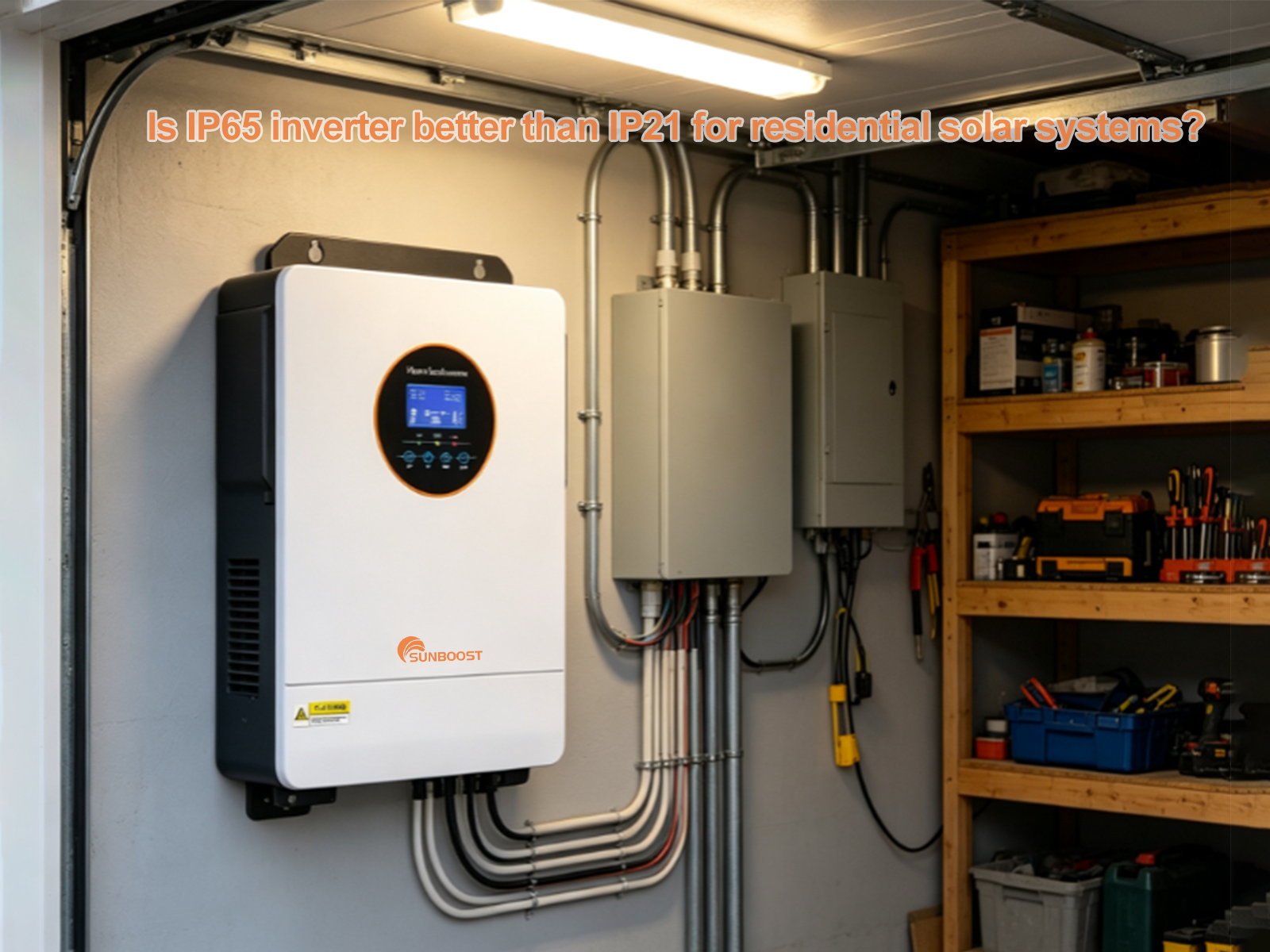
Solar hybrid inverters produce zero emissions during operation, with no dangerous exhaust fumes to ventilate. The unit holds an IP21 protection rating for indoor wall-mounted installation, with built-in overcharge, short-circuit, overheating, and overload safety protocols to shield your home and battery bank. Pure sine wave AC output safely powers fragile electronics including laptops, televisions, and medical equipment—modified sine wave cheap generators often damage sensitive circuit boards over time.
Which option is right for your situation?
Choose a gas generator if:
1.You only need power for occasional, ultra-short emergency use once or twice per year
2.You cannot install solar panels on your property (rentals with roof restrictions, shaded lots)
3.Your budget only covers minimal upfront equipment, and you accept ongoing fuel and maintenance expenses
Choose the SUNBOOST iXCEED Hybrid Solar Inverter if:
1.You own a home, cabin, or RV and want long-term, low-cost daily and backup power
Noise pollution from running generators is a major concern for your family or neighbors
2.You rely on 240V heavy household appliances (AC, well pumps, ovens)
3.You want off-grid self-sufficiency or reliable multi-day power during hurricane/blackout seasons
4.You prefer minimal maintenance, zero fuel costs, and quiet round-the-clock operation
5.You want flexible hybrid functionality: solar, battery, grid, and generator all integrated into one unit
Conclusion
The core difference between gas generators and modern hybrid solar inverters lies in sustainability, convenience, and livability. While portable gas generators can solve short-term power shortages, they come with numerous drawbacks: deafening noise, ongoing fuel costs, high maintenance costs, toxic emissions, and strict usage restrictions. The SUNBOOST iXCEED split-phase hybrid solar inverter addresses all the pain points of traditional generators, achieving near-silent operation, free solar energy capture through 99% efficient MPPT technology, full compatibility with split-phase home power supplies, and flexible multi-source energy management.
For North American homeowners, off-grid homeowners, and those planning for long-term power reliability and emergency preparedness, a solar hybrid inverter system offers unparalleled everyday comfort and long-term value. You'll say goodbye to constant generator noise, reduce ongoing energy costs, and gain independent, clean backup power that operates 24/7—without disrupting the tranquility of your home. Whether you're preparing for seasonal grid outages or building a fully self-sufficient off-grid property, a split-phase hybrid solar inverter is a more practical and user-friendly upgrade option than outdated gas generators. Hopefully, this information will help you make your choice.