In solar photovoltaic system deployment, inverter enclosure protection rating is a core technical parameter that dictates equipment operational stability and service lifespan.
Defined by the IEC 60529 international standard, IP ingress protection class determines an inverter’s resistance against dust intrusion, ambient moisture and accidental physical contact across on-grid and off-grid PV projects.
Most system integrators and project stakeholders frequently search for IP rating selection criteria on Google, yet many fall into the misconception that higher IP grades deliver better overall performance.
In fact, protection level selection should strictly align with installation ambient conditions.
What Is Inverter IP Protection Rating?
If you are confused about these inverter protection rating questions, you are not alone. Choosing a suitable IP grade is not about picking the highest number available; it is about matching the inverter enclosure protection to your installation location, working environment and project budget.
First, let’s clarify what an inverter IP rating means. The two-digit IP (Ingress Protection) code is a global industry standard that measures how well electrical equipment is sealed against solid particles and water. The first digit stands for solid particle and foreign object protection; the second refers to liquid water resistance. For residential and commercial power inverters, IP21 and IP65 are by far the two most widely used ratings that buyers compare the most frequently.
Key Differences Between IP21 and IP65 Inverters
When it comes to solar PV inverters, IP21 and IP65 dominate the global market and are the most frequently compared specs for integrators and end users. Their core gaps lie in dustproof, waterproof capacity and applicable PV installation scenarios, which we break down clearly below.
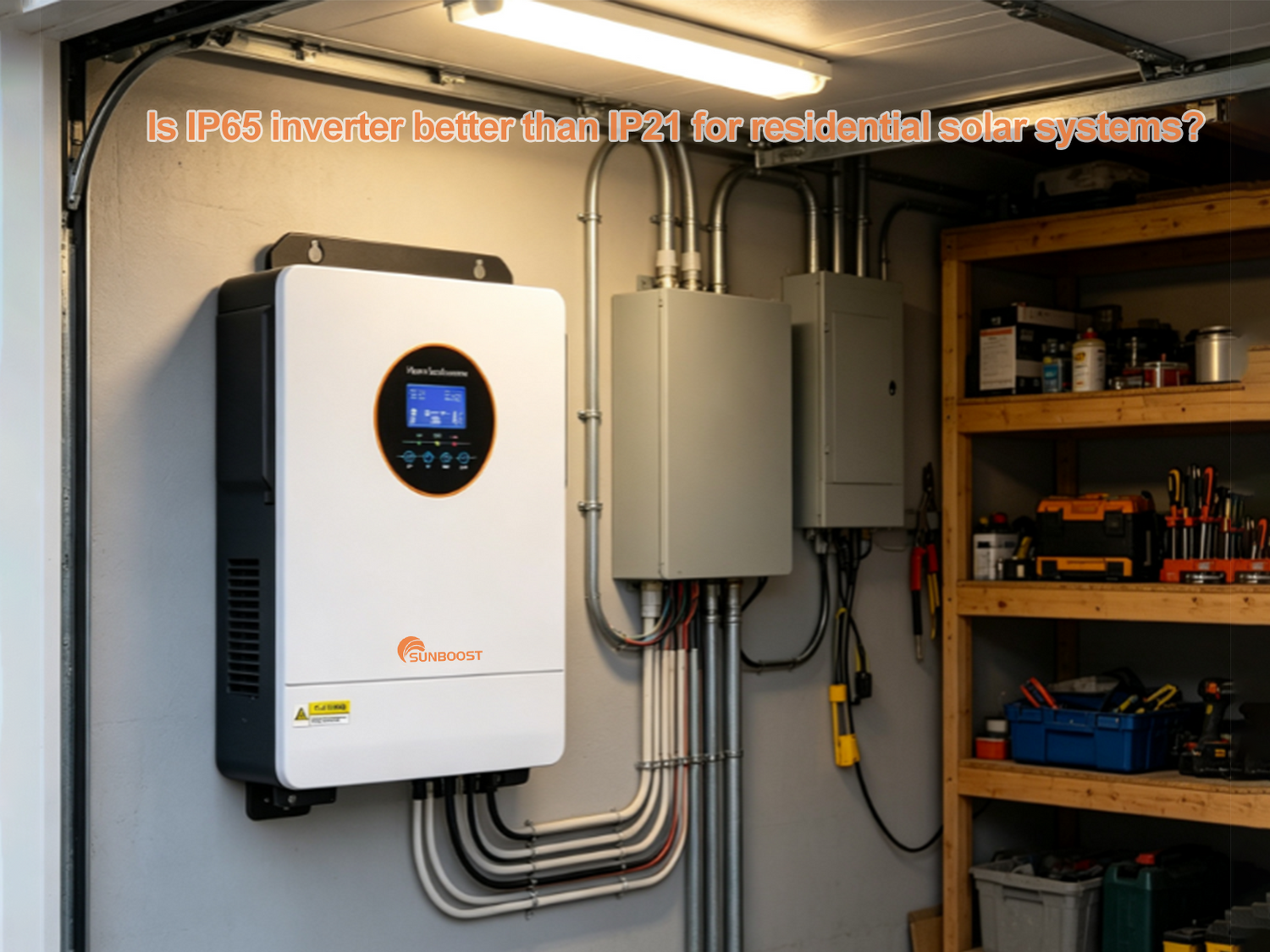
An IP21 rated solar inverter features basic industrial ingress protection tailored for benign indoor PV environments. The first digit “2” indicates it blocks objects larger than 12.5mm, preventing accidental finger contact with high-voltage internal components inside PV inverters. The second digit “1” only defends against vertical water dripping and minor indoor condensation. As we highlighted, our IP21 solar inverters are strictly tested for indoor PV deployment: they work stably in indoor power distribution rooms, basement PV equipment cabinets and well-ventilated plant control rooms. Since indoor spaces have no rainfall or airborne fine dust, this rating fully meets IEC safety requirements for grid-tied solar systems.
By contrast, IP65 is a high-grade rugged protection rating designed for field outdoor solar installations. The digit “6” means the enclosure is completely dust-tight; no fine particulate dust can penetrate the inverter casing at all, which is critical for rooftop and ground-mount solar projects in dusty industrial zones. The digit “5” enables full resistance to low-pressure water jets from all directions, resisting rain splash, dew erosion and coastal salt fog.
This makes IP65 inverters the go-to choice for exposed rooftop solar arrays, open-air ground solar stations and humid seaside PV projects with no extra canopy shelter.
Many users overlook the practical advantages of IP21 inverters just because IP65 has a higher rating. The biggest benefits of our IP21 inverters target indoor PV project scenarios directly. First, open ventilation casing design brings better heat dissipation.
Solar inverters generate massive heat during DC-AC power conversion; IP21 breathable enclosures dissipate heat far more efficiently than fully sealed IP65 models under normal indoor conditions, extending the whole PV system’s service life. Second, IP21 inverters are more cost-effective for indoor solar projects. They have no expensive fully sealed waterproof housing, cutting redundant procurement costs for indoor system builds with zero compromise on power conversion performance.
ip21 inverter 6kw price in North America?
For 6kW IP21 indoor solar inverters,In 2026, the price of a 6kW IP21 indoor solar inverter in the North American market depends on product type, brand certification, and sales model. Unlike IP65 outdoor inverters, IP21 inverters are generally cheaper due to their simplified, unsealed housing construction, eliminating the need for additional waterproofing accessories.
In the United States, we already have a 6.2kW inverter with Wi-Fi in stock. This includes a built-in MPPT tracker, Wi-Fi system monitoring, and a one-year manufacturer's warranty. Since these IP21 inverters are only for indoor installation and require no additional outdoor installation or weatherproofing accessories, they are the most cost-effective solar power solution for indoor residential and small commercial solar projects in North America.

Final
Here are simple, actionable rules to help you finalize your inverter protection level quickly:
Choose our IP21 inverter if you install the unit indoors, in clean, dry, enclosed sheltered spaces with no direct rain, heavy dust or water splashes. It is the most cost-efficient and technically optimal option for all standard indoor commercial and residential power system layouts.
Upgrade to IP65 only for fully exposed outdoor mounting, high-dust workshops, humid seaside environments or sites with regular water splashing. There is no need to overpay for IP65 extra protection if your inverter stays indoors.
To sum up, higher IP ratings do not always equal a better inverter. For all indoor applications, our IP21 inverters meet all safety and operational standards, run cooler and save your total project budget.
Match the rating to your installation environment, and you will make the most reliable long-term choice.